

Raising Funds to Increase Free and Charitable Clinic Capacity
Informing and Influencing Funders in the Face of Significant Demand Change
The Virginia Association of Free and Charitable Clinics (VAFCC) contributed to this post.
As explained in our prior post, Responding to Patient Demand from Federal Insurance Changes, free and charitable clinics will to need to raise more funds to sustain, let alone increase, patient capacity. In fact, this is virtually non-negotiable, as most clinics will otherwise reach capacity early in 2027 given their current financial resources, which will affect access for both established and new patients. Retaining current funders while finding and converting untapped sources among businesses, individuals, foundations, and the public sector is critical.
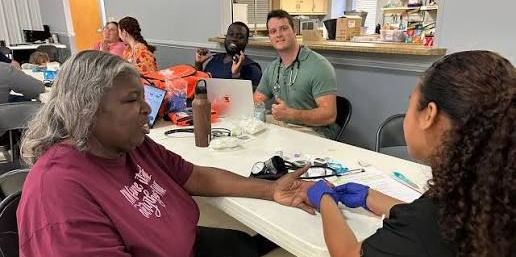
Trying to reach everyone wastes time and resources. Messaging can’t be customized, meaning it’s not nearly as effective as directly approaching specific, vetted audiences. Segmentation and analysis is critical to defining high-potential prospect pools, whether they’re donors, sponsors, or grantors. It’s not enough, however. Once they’re identified, clinics need to find out why they’re interested in the situation surrounding health insurance, how to tell them about it, and how to influence them. An accurate understanding is essential, and it takes research to get it right.
Getting to know their audiences “up close and personal” allows clinics to:
1. Frame the problem and explain the impacts.
The broad problem is relatively clear, but simply describing it won’t influence most prospects’ giving decisions. The nuances matter. Each segment will have unique concerns clinics need to directly target in their messaging. Individuals, for example, may simply care about their neighbors. Foundations, however, may be interested in the local demographic or medical impacts of policy changes. Business leaders may respond to the message that employees who have lost coverage will get sick more often, resulting in more frequent and often longer absences.
2. Position themselves as a critical response.
In today’s political environment, free and charitable clinics are essential. They just need to demonstrate what they can do if given adequate funding. This means addressing prospective funders’ specific issues. Following the examples above, clinics may have to show how they plan to address demographic shifts and/or geographic impacts among uninsured populations to secure funding from a particular foundation funding. They may also demonstrate to the business community how their services can maintain productivity and reduce overtime.
3. Ask for what’s needed to address the challenges.
Conversion requires a clear request that’s directly tied to the funder’s concerns. This means asking for a specific amount and, to the extent possible, tying it to uses and/or outcomes. Tailoring the message is key. Individuals may best respond to general community impacts (e.g., “your $500 lets us see ten neighbors who’d otherwise not get care”). Institutional funders want results related to their missions and interests. Although it can be difficult to define, clinics prospects are much more likely to give when they know how much and what they’re “buying.”
Conveying these things to the right segments and persuading them to give requires effective storytelling, whether the target audience is a donor, sponsor, or grantor. It’s worth spending a moment on stories, since they are the keys to connecting with and influencing funders. When well crafted, they help create conditions that will lead to mutually beneficial action. Prospects will see why contributing to clinics will help satisfy their various philanthropic interests, which drives giving decisions that ultimately deliver clinics the money they need to produce the promised results.
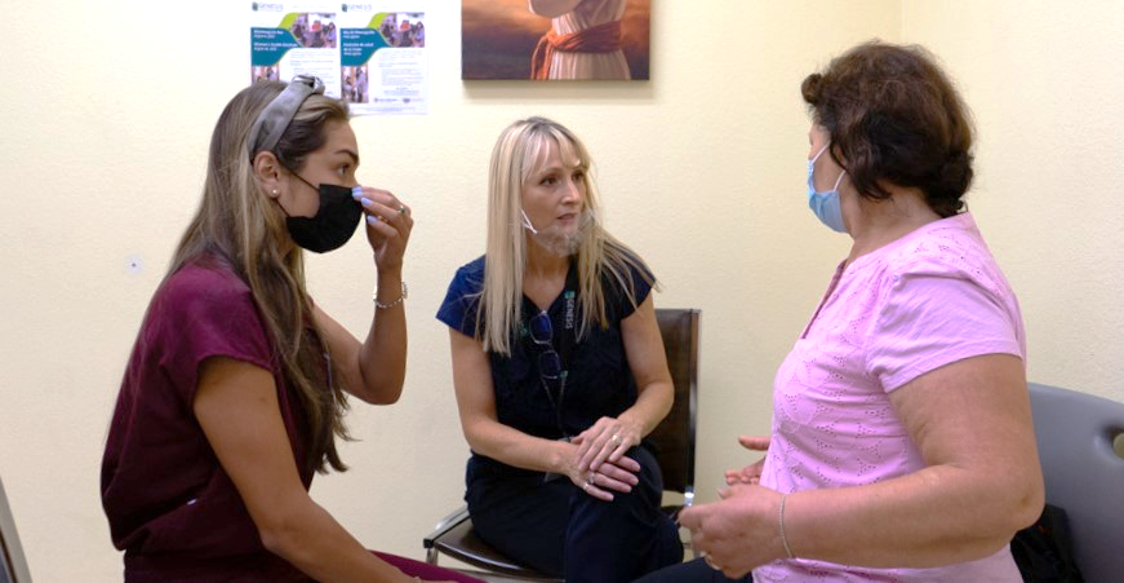
It’s important to understand storytelling is a process, and recognize stories:
§ Are best as a “sum of parts,” rather than a one-off presentation. It’s not easy for target audiences to consume all of what they need to know when they’re hit with everything all at once. Good storytelling uses messages as building blocks to develop prospect interest incrementally, making the situation and the “ask” simpler to grasp. In some circumstances, the roll-out can occur over a period of time, while in others they’ll need to be conveyed in one setting. Regardless of the situation, however, the same principles apply.
▪ Need to be specific and uniquely connected to different target audiences.
Knowledge of each key segment will in part guide what information to provide, to whom. It will also indicate how to communicate that information to, for example, elicit emotional responses from individual donors vs. emphasize the concrete interests of foundations, businesses, or governments). Clinics should be prepared to draft and deliver multiple messages tailored to key segments, while avoiding elements and terms that may drive certain groups away.
▪ Apply to every prospect, from community segments to companies and grantors.
As noted above, the stories will be different depending on the audiences. So will the ways in which they are presented (e.g., in a focused public or corporate campaign vs. a grant application). Clear, compelling explanations of the problem, impacts linked to audience interests, role of clinics as credible parts of the answers, and financial needs and uses will always be necessary, no matter who a clinic’s appeals for support are intended for.
▪ Can be told in different ways to appeal to different prospects.
They can leverage detailed data or be described at a high level, be formally or informally presented, and convey broad community or individual, personal impacts. Decisions on how to best tell the health insurance story depend on which part of the story is being communicated and the intended audiences. A formal, data-driven approach may, for example, be appropriate for a grantor, while a high-level approach, more descriptive message may be better for individual donor segments.
Clinics need current data, both qualitative and quantitative. It’s critical for planning, but it’s also essential accurate, persuasive storytelling. Effective messaging requires weaving together facts, figures, case studies, personal testimonies, etc. in various ways for different respondents. Unfortunately, there are few standards across clinics in terms of what data is collected, which leaves gaps in story content. As such, every clinic should be actively identifying and obtaining the specific information they need to communicate what prospective funders need to hear.
It's also worth emphasizing the benefits of investing in fundraising. Studies show that adding professional marketing and development support generates, on average, contributions three to four times the cost of the resource(s). The temptation, especially in smaller clinics, can be to ask Executive Directors to take on all of the donor outreach or distribute responsibility to other staff and/or volunteers, primarily because of budgets. This is exactly the wrong approach. Specialized expertise, even on a part-time basis, is almost always worth the added expense.
One other note of caution: Investing in marketing does not equate to simply employing ChatGPT, Claude, or other Artificial Intelligence (AI) applications. This is a whole other topic, but for now it’s important for clinic leaders to understand that despite the noise, AI has its limitations, especially for those who aren’t “expert users.” AI can help with storytelling, but it cannot “meet and greet” funders, nor should it be counted on to adequately interpret what they say. Clinics don’t need “generic” in the current environment, and true customization still requires a human touch.
There are many calls to action in the above discussion. If we had to pick a few, we’d say:
▪ Meet the prospects.
There’s no substitute for learning who your audiences, and you can get to know them. Think about, given the impacts on local populations, who is going to care the most, ask them about it, and find out what they need to know.
▪ Get the information.
Some funders respond to basic data, others will react to personal stories that “tear at the heartstrings,” and there are those who truly care about the details of who’s affected and how clinics will help. Be prepared to speak to all of them.
▪ Invest in the process.
Non-profits in general are squeamish about putting money into anything other than “programs.” Clinics cannot fall into this trap, especially now. Marketing resources pay for themselves. Leaders need to get them, today.
It’s clear that generating more funds is absolutely critical for clinics facing increased demand due to the sunsetting of ACA subsidies, Medicaid eligibility changes, and related economic conditions. As we discussed in our previous post, however, it’s not the only strategy clinics can take, and most should be considering a mixed approach. Our upcoming posts will discuss program focus and service delivery, workforce considerations, partnerships, and community support that can decrease demand on clinics. Stay tuned for our next article in the series!
About the Contributors

Snowflake Consulting is a Certified B Corporation® consultancy dedicated to helping organizations elevate people and communities. For over a decade, we've worked with non-profits, governments, and socially-conscious businesses to advance the common good. We offer collaborative strategy, organization, leadership, workforce, and marketing solutions. Explore our company and services to learn more.

Founded in 1993, the Virginia Association of Free and Charitable Clinics (VAFCC) is a unifying voice and effective advocate for the issues and concerns of Virginia's free and charitable clinics, their volunteer workforce of doctors, dentists, nurses, therapists, pharmacists, technicians, and other health care professionals, and the patients they serve. Learn more at www.vafreeclinics.org.
Next Steps
Schedule a free 30-minute conversation to talk about your clinic's funding in this new environment.
Don't miss the next post. Sign up for our mailing list!
Contact Us
Read Other Posts